
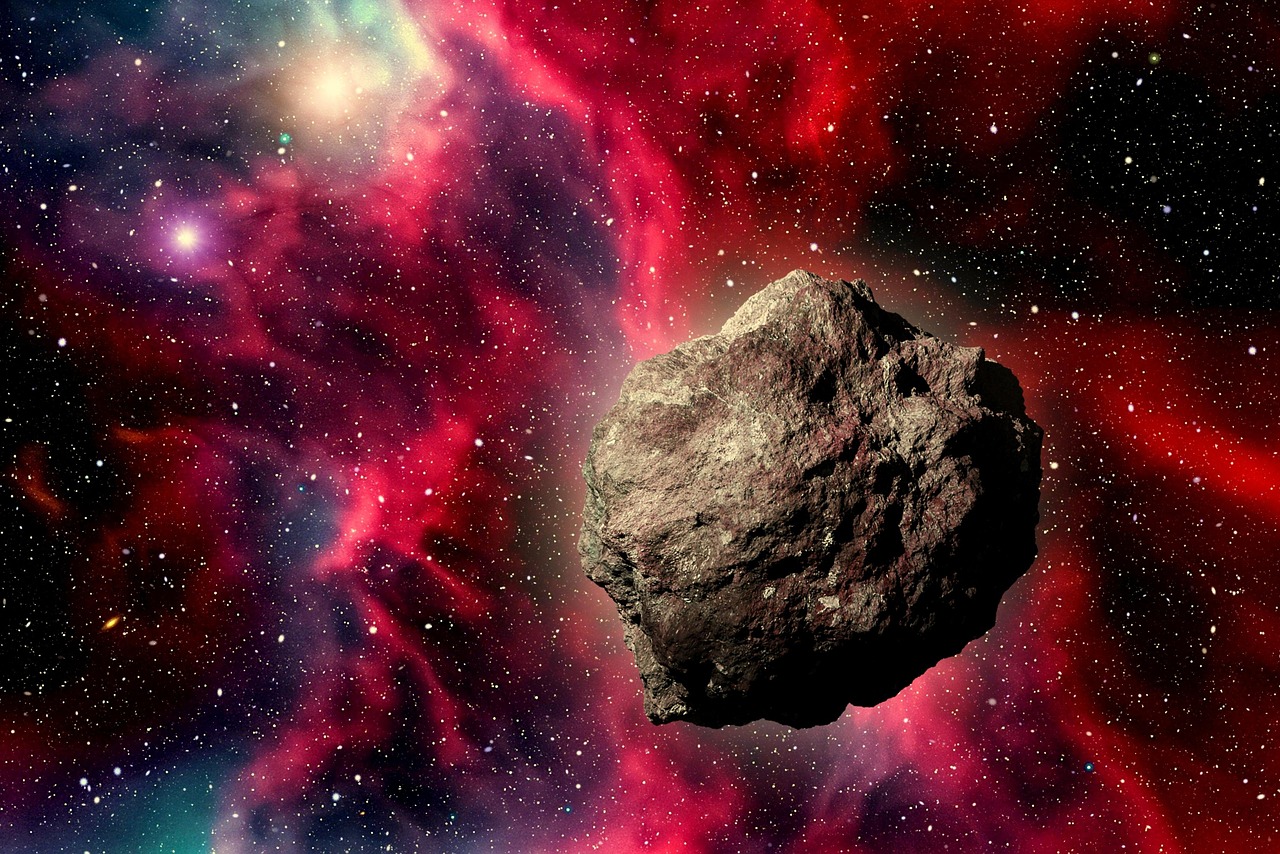
Did life on Earth come from space? This idea has been prevalent for some time, especially with the discovery that asteroids contain the basic building blocks of life—particularly essential amino acids. These compounds may have reached Earth through meteorite showers or debris from asteroids.
Amino acids are believed to have formed in the liquid environments of asteroids. One of the most significant discoveries supporting this idea came from the National Aeronautics and Space Administration’s OSIRIS-REX mission, which landed on the asteroid Bennu in 2020. Bennu, which passes close to Earth roughly every six years, was found to contain tryptophan—one of the most complex amino acids essential for life.
The mission collected about 4.3 ounces (around 122 grams) of rocks and dust and returned them to Earth in 2023. These samples provided a snapshot of the chemistry of the early solar system. Earlier studies had already shown that Bennu contains 14 of the 20 amino acids used by all living beings on Earth, along with five biological nucleobases—the building blocks of DNA and RNA.
Bennu is over 4.5 billion years old and dates back to the earliest days of the solar system. The presence of a complex amino acid like tryptophan suggests that such molecules were already being formed at the very beginning of solar system history. The dust from Bennu was rich in carbon, nitrogen and organic compounds—all crucial ingredients for life.
Scientists were also surprised to find magnesium-sodium phosphate in the samples. One of the most exciting discoveries was the presence of water-soluble phosphates, which are essential for life on Earth. Bennu’s composition closely resembles carbon-rich meteorites found on Earth and includes some of the oldest known material in the solar system.
Amino acids have also been found in samples from another asteroid, Ryugu, which were collected by Japan in 2019, as well as in meteorites that have landed on Earth. These findings strongly suggest that chemical reactions within asteroids can produce key ingredients for life, which could then have been delivered to the ancient Earth through meteorite impacts.
In 1969, the Murchison meteorite that fell in Australia was found to contain dozens of different amino acids—the fundamental building blocks of life.
In 2022, asteroid Ryugu samples returned to Earth through Japan’s Hayabusa2 mission and the number of amino acids identified in those samples now exceeds 20 different types.
As far as how life actually arose on Earth is concerned, the most widely accepted explanation remains the classic experiment conducted by Stanley Miller and Harold Urey. Their work proposed that life emerged from a primordial “soup” of elements present on early Earth.
Miller and Urey injected ammonia, methane and water vapor into an enclosed glass container to simulate what were then believed to be the conditions of Earth’s early atmosphere. They then passed electrical sparks through the container to represent lightning. Soon after, amino acids—the building blocks of proteins—were formed. Miller and Urey concluded that this process could have paved the way for the formation of molecules necessary for life.
However, another theory, based on a recent study by the Institute of Geological Sciences at the University of Bern, suggests that after the formation of the solar system, it took up to three million years for Earth’s chemical composition to stabilize. At that stage, the young planet contained hardly any elements essential for life, such as water or carbon compounds. This raises the question: where did these elements come from?
According to this theory, proto-Earth was initially a dry, rocky planet. A later collision with another Mars-sized planet, known as Theia, may have brought the decisive turning point. Theia is believed to have formed farther out in the solar system, where volatile substances such as water could accumulate. This collision may have delivered the crucial elements required for life and transformed Earth into a life-friendly planet.