
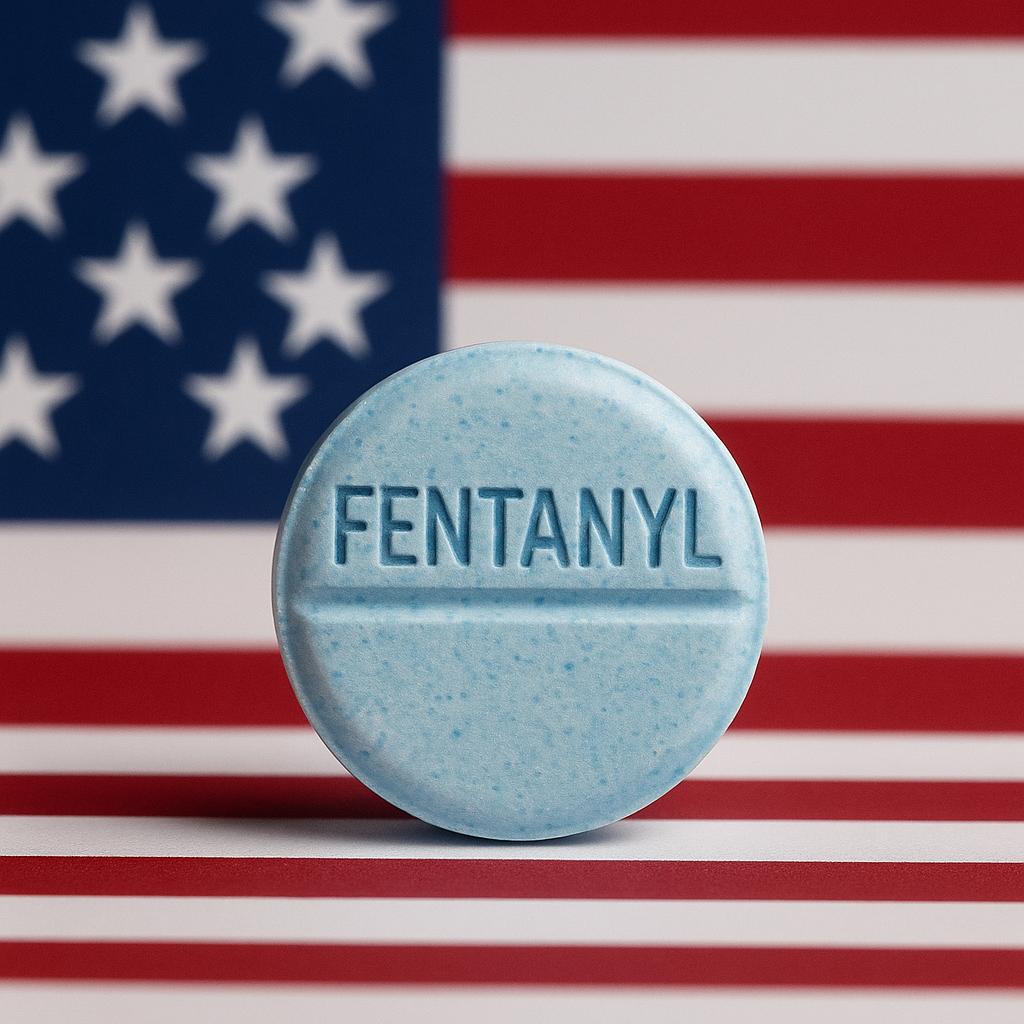
Have you heard names like Goodfella, Jackpot, Murder 8, TNT, Tango & Cash, Fetty, Fent, Sublimaze, Actiq, and Durogesic?
These are all street names for the world’s deadliest drug — fentanyl.
What is of serious concern is that fentanyl use is rising in India, along with allegations that it is being exported from the country. The allegation comes from none other than U.S. President Trump, who, in a presidential determination, has identified India as a “major drug transit” and “major illicit drug producing country” — a charge India is unlikely to agree with.
Fentanyl is an opioid drug like morphine or heroin, but is 100 times more potent than morphine and 50 times more potent than heroin. It is widely used as a pain reliever and anaesthetic, prescribed for severe pain.
India appears to be on the cusp of becoming a major user of fentanyl, as the synthetic drug market is rapidly expanding. The United Nations’ drug control agencies are monitoring the situation closely. In states like Mizoram, the use of fentanyl and overdose deaths have already been reported.
Fentanyl is highly addictive. Like other opioids, repeated use alters brain activity, compelling individuals to continue using it despite harmful effects. It is responsible for thousands of deaths in North America, where fentanyl abuse is rampant. Even a slight overdose can cause serious complications, including death.
The UN Office on Drugs and Crime (UNODC) has consistently highlighted the rising threat of synthetic drugs such as fentanyl. According to the UN, there has been massive growth in the synthetic drug market from 2024–25. One reason is that plant-based illicit drugs are more expensive to produce compared to chemical-based ones, which are cheaper and easier to manufacture. As a result, drug networks are shifting from heroin (a plant-based drug) to chemical-based opioids, which are more potent, even if far more dangerous.
Synthetic opioids like nitazenes and fentanyl are becoming increasingly popular. India is known as a key manufacturing and transit point for pharmaceutical opioids such as fentanyl and tramadol. According to the UN, seizures of synthetic drugs — including methamphetamine — are rising across South Asia, with Indian traffickers developing global networks.
In a March 2025 report, the UN warned that synthetic drugs like fentanyl could soon outpace traditional narcotics worldwide, posing a growing threat to South Asia. Given India’s large pharmaceutical industry, there are concerns that the country could become a source of precursor chemicals used to manufacture fentanyl.
The UN has also warned of increasing drug trafficking, noting that there are nearly 300 million drug users globally. India has emerged as a source of fentanyl and its precursors within the global fentanyl supply chain. Although fentanyl is a legitimate prescription medicine, it is alleged that much of the fentanyl contributing to the current overdose crisis is manufactured in India.
Fentanyl has been used medically for over 50 years. It is prescribed for chronic pain, severe cancer pain, nerve damage, back injury, major trauma, and post-surgical pain. When used as prescribed, fentanyl can be safe and effective.
It is available in patches, lollipops or lozenges, tablets, sprays, and injections. Illegally manufactured fentanyl, however, varies widely in quality and typically appears as a white powder. It can produce euphoria and pain relief, but also causes side effects such as nausea, vomiting, drowsiness, confusion, impaired balance, slow pulse, and low blood pressure.
Signs of overdose include slow or shallow breathing, bluish or greyish lips and skin, and loss of consciousness. Overdose can lead to coma and death. Prolonged use can also cause reduced sex drive, infertility, erectile dysfunction, menstrual changes, and mental health issues such as depression and anxiety. More than 40% of illicit opioid users reportedly experience symptoms of PTSD.
Fentanyl is primarily manufactured in China and reaches users in the U.S., Mexico, and Canada, where it has killed thousands. Nearly 2.5 million people in the U.S. abuse opioids. President Trump has declared the opioid crisis a public health emergency.
Fentanyl reaches the U.S. as precursor chemicals, fentanyl variants, and fentanyl-laced counterfeit prescription pills. India exports many controlled and prescription drugs to the U.S., including fentanyl. However, unlike China — which has placed over 100 fentanyl variants and precursors on its controlled substances list — India has not designated fentanyl or most other opioids as controlled substances.
India currently regulates only 17 of the 24 fentanyl precursor chemicals listed under the UN’s 1988 Convention against Drugs.