
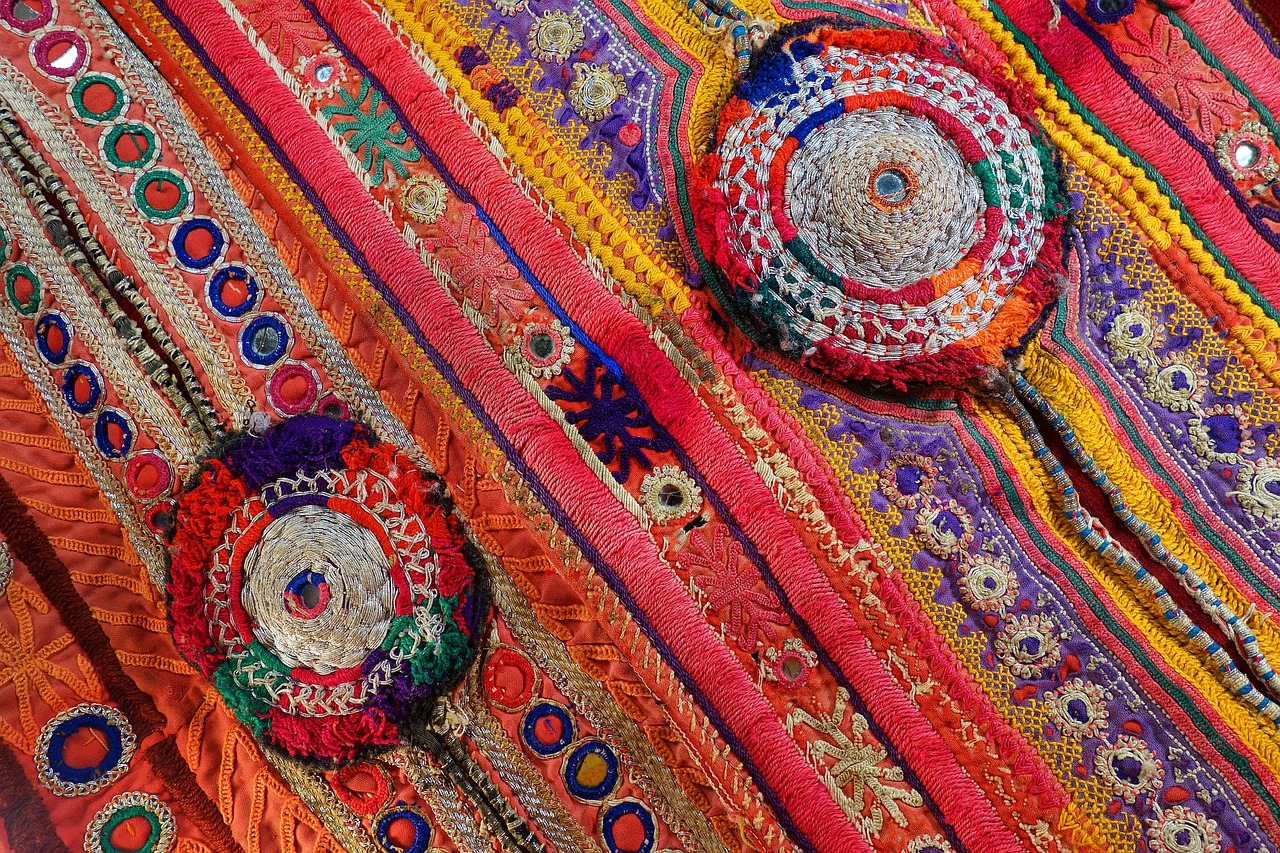
Indian textile market currently ranks fifth in the world.
Renowned for its textile world over since ages, it has today become the global textile manufacturing and export hub. It is not only known to play its role in India’s Independence struggle as a producer of common man’s cloth – ‘khadi’, it is one of the largest contributors to India’s economy, providing employment to millions and generating substantial foreign exchange earnings.
The sector generates large amounts of foreign investment due to cheap and skilled labour force in the textile sector. In the year 2024 (April-Dec) the sector got FDI inflows to the tune of US $ 4.59 billion. The textile and apparel industry contributes 2.3% to our GDP, 13% to industrial production and 12% to exports. India exported textile items worth US$ 34.4 billion in 2023-24, with apparel constituting 42% followed by raw materials/semi-finished materials at 34% and finished non-apparel goods at 30%.
Nearly 45 million people are employed directly by the textile sector, clearly one of the mainstay of employment in the country , second only to agriculture. Several objectives of the central government are fulfilled by encouraging this sector as it fulfils the objectives of schemes like Make in India, Skill India, Women’s Empowerment, Rural Youth Employment and inclusive growth.
The industry produces about 22,000 million pieces of garments per year, with the market size projected to reach US$ 350 billion by 2030, from the current $174 billion. The Ministry of Textiles in an upward trend of growth reported a 7% increase in textile and apparel exports, including handicrafts, from April to December 2024, compared to the same period the previous year.
Several key policy interventions , providing incentives enhancing infrastructure under the Make in India policy have completely changed the scenario of textile manufacturing and exports in the country. To encourage textile industry the government has also exempted textile machinery as far as taxes are concerned.
Large scale textile manufacturers are given several financial incentives by the government besides the government has introduced schemes to boost production and exports of textile like Production Linked Incentive with a budget of Rs10,683.
With a whopping budget of Rs 4,445 cropre for a period of 2021-28 the government has developed PM MITRA (Mega Integrated Textile Region and Apparel) Parks in seven states like Uttar Pradesh,Gujarat,Maharashtra,Karnataka,Tamil Nadu,
Telangana,Madhya Pradesh, to provide world-class industrial infrastructure for textile manufacturing. The idea being to develop integrated large scale and modern industrial infrastructure facility for total value-chain of the textile industry like spinning, weaving, processing, garmenting, textile manufacturing.
It would bring about reduced logistics costs, increased FDI, and better competitiveness in global markets. To provide skill training to workers in the textile industry has been introduced Samarth(Scheme for Capacity Building in Textile Sector) in partnership with the Ministry of Skill Development & Entrepreneurship with a budget of Rs.115 crores in 2023-24.
As of March 27, 2025, more than 4.78 lakh users have been registered on the Samarth portal and nearly 3.82 lakh beneficiaries have been trained (passed) and 2.97 lakh beneficiaries have been placed. Nearly Rs.853 crores has been allocated for the Textile Cluster Development Scheme to bring about competitiveness in manufacturing, cost efficiency and better access to technology and information.
The government has started a National Technical Textiles Mission (NTTM) to boost Technical Textiles in the country with a Rs. 1480 crores budget for undertaking research, innovation and development, promotion and market development, education and skilling and export promotion in technical textiles to position country as global leader in technical textile. As on January 1, 2025, 168 projects of value approximately ₹509 crores have been approved in the category of Specialty fibres and Technical Textiles.