
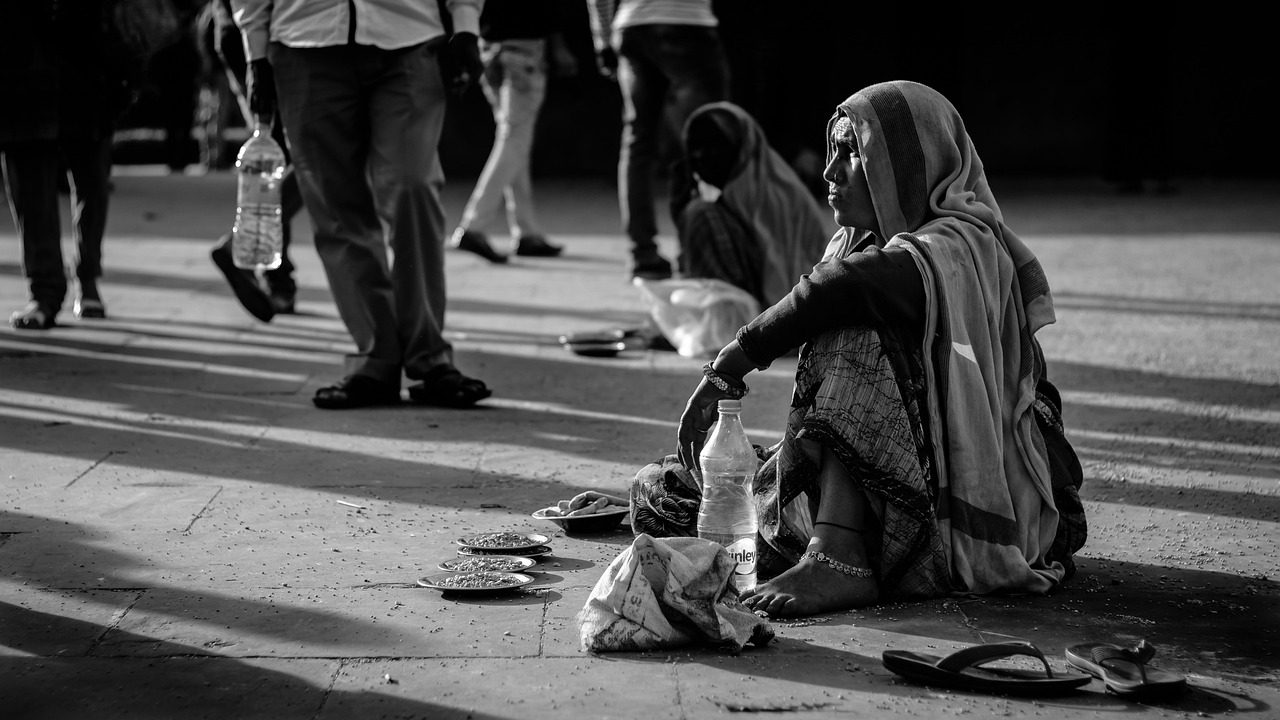
The World Food Programme of the United Nations and the UN Food and Agriculture Organisation have warned that people in five hunger hot spots in the world today face the immediate threat of starvation.
These include Gaza, Sudan, South Sudan, Mali, and Haiti.
In addition to hotspots of highest concern, Yemen, the Democratic Republic of the Congo, Myanmar and Nigeria are now hotspots of very high concern and require urgent attention to save lives and livelihoods. Other hotspots include Burkina Faso, Chad, Somalia, and Syria.
Lack of food and hunger is becoming a serious global issue with some spots becoming critical facing imminent starvation. Violent conflicts which are arising in different parts of the world is not only leading to displacement of citizens but forcing people to leave their country and go elsewhere .
More than 12 million people have been displaced in Sudan. Half of Sudanese population and a million people have fled from Sudan to South Sudan. Sudan and South Sudan are of “highest concern” according to the United Nations. A new report released on Monday by the World Food Programme (WFP) and the Food and Agriculture Organization (FAO) also identified Palestine, Mali and Haiti as places where food situation could worsen.
Seven other countries also are likely to face severe situation as far food security is concerned in the next five months with high risks of starvation and death.
The report, which analyses existing data to project the nature of food insecurity, emphasised the need for immediate humanitarian assistance, to save people from high risks of starvation and death.
UN Food and Agriculture Organisation Director General QU Dongue has said. “This report makes it very clear: hunger today is not a distant threat – it is a daily emergency for millions. We must act now and act together to save lives and safeguard livelihoods.”
The report has identified that the “main driver of hunger is conflict” added with climate and economic shocks. “There’s an on-going famine in Sudan and also a risk of famine in the case of Gaza. And all of those are driven by conflict and lack of access for humanitarians,” according to Jean-Martin Baucer, FAO food security analysis director.
Nearly 500,000 in Gaza are projected to face “catastrophic” levels of food insecurity, the report points out. Climate shocks and conflict often cause protracted economic declines, diminishing the purchasing power and self-sustaining capacity of households and communities, the report adds. WFP and FAO has called for the international community to drastically step up funding for food and nutrition related humanitarian aid in the coming months and advocate for an end to the fighting.
The report says that in May, the food aid sector estimated that it would need $12.2 billion, but only nine per cent of this was funded. Interestingly India too is not also in a very comfortable position because as per an earlier report of the UN, despite tremendous progress over the last few decades in food grain production and a reduction in malnutrition rates, it continues to bear a huge burden of food and nutrition insecurity.
India ranks 105 out of 127 countries on the 2024 Global Hunger Index. It reported that the prevalence of malnutrition is above acceptable levels in India with 35 percent and 19 percent of children below 5 years being too short for their age and having low weight for their age respectively.
The prevalence of anaemia is alarmingly high, especially among women of reproductive age (57 percent) and children 6-59 months (67 percent), it said. One must look at these figures in the context of India having the world’s largest food-based safety nets, reaching nearly 800 million vulnerable people monthly.
The National Food Security Mission primarily is tasked to look after India’s food security and it increases both the area of production and productivity to produce the maximum output. Of the technological solutions one has been the SMART Warehouse solution implemented in 15 warehouses across five locations nationwide. This initiative utilises sensor based monitoring, real-time inventory tracking, and AI-driven analytics to minimise storage losses and improve management.
Under the Mission the nation produces staple crops like wheat, rice, pulses but still the country’s agriculture import stood at Rs.3,300 crores in 2023 and vegetable oil around Rs. 1710 crores. This only highlights the fact that India still is not totally self-sufficient in its essential food production so that it would not depend on imports at all for fulfilling its essential food needs.