
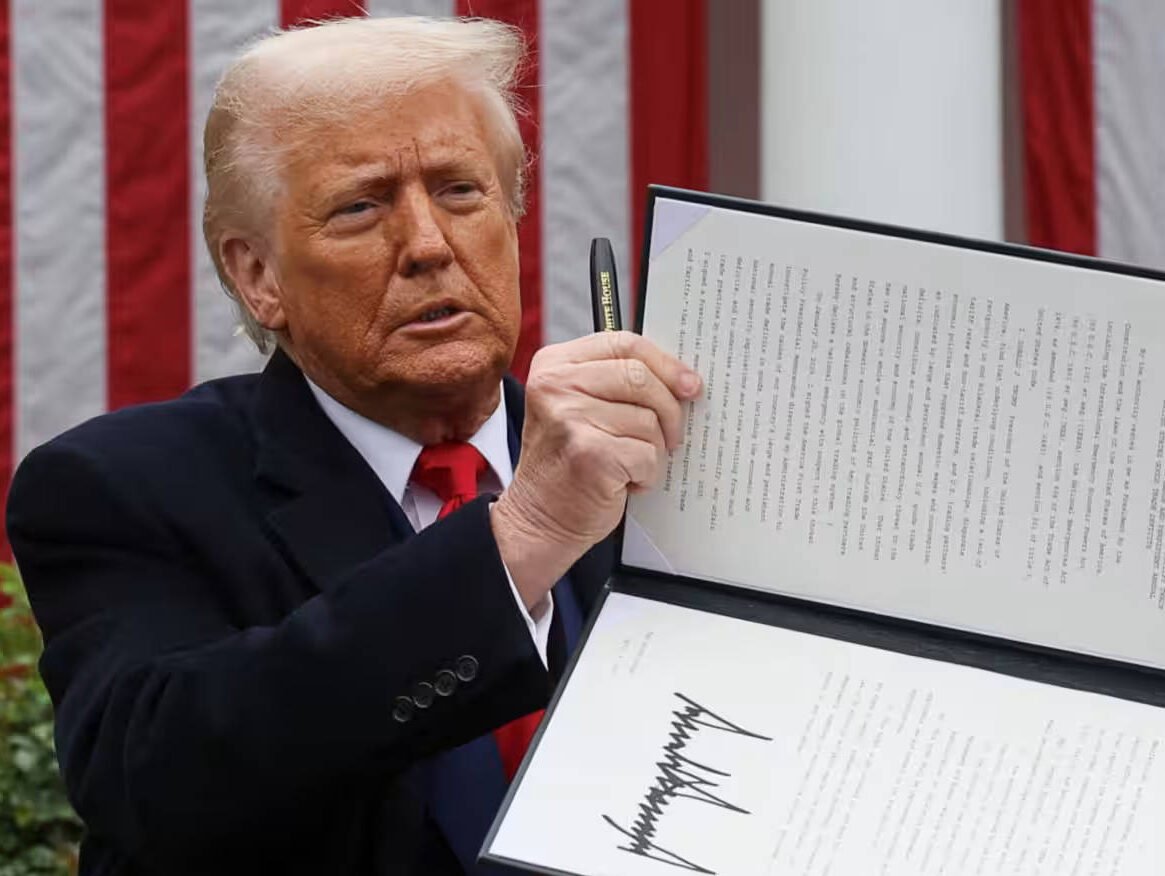
American President Donald Trump’s decision to hike tariffs on cut and polished diamonds from India — as a punitive measure for India’s continued purchase of Russian oil — may ultimately backfire.
Nearly 90 percent of the world’s rough diamonds are cut and polished in India, primarily in Surat, Gujarat. The Indian diamond industry is valued at approximately US$10 billion and remains the global leader in diamond processing and export.
However, this dominant industry has been dealt a serious blow by President Trump’s move to impose a 50% tariff on cut and polished diamonds. Despite this, industry insiders believe the situation may be temporary.
Diamond merchant Arvind Jain stated, “Even if a 200% tariff is imposed on cut and polished diamonds from India, we should not panic. As our elders say, we always have more than one customer. If America acts recalcitrant today, there are many other countries that would love to buy diamonds from India.”
Ironically, the American diamond industry and its consumers may become the ultimate losers in this trade confrontation. As Trump enforces his tariff threat, imports of Indian diamonds to the U.S. have already plunged by 90% — from $579 million in January 2025 to just $58 million in June 2025. This decline is expected to drive up retail diamond prices once existing stocks are depleted and higher import costs are passed on to consumers.
With the tariff now doubled to 50%, the American jewellery business and consumers are likely to be hit particularly hard.
During fiscal year 2024, India exported $15.7 billion worth of cut and polished diamonds to the United States. However, due to higher tariffs and weakening consumer demand in the U.S., India may divert its diamond trade toward alternative markets such as Europe and Russia — undermining Washington’s attempt to “teach India a lesson.”
India remains the world’s most dominant player in diamond processing, accounting for nearly 90% of the global output. The United States, meanwhile, is one of the largest markets for Indian diamonds.
Should American buyers reduce purchases due to rising prices, Indian producers may need to seek new markets, though finding customers will not be difficult given India’s reputation for high-quality craftsmanship.
In the short term, however, the Indian government must step in to support the nearly 8.2 lakh skilled workers employed in the diamond-cutting and polishing sector. According to the Gem and Jewellery Export Promotion Council (GJEPC), around 1.7 lakh workers’ livelihoods are at risk, along with 85% of the medium and small enterprises engaged in diamond processing.
India’s gold and diamond trade contributes about 7% to the country’s GDP, with the Gems and Jewellery sector employing nearly five million people. As of January 2025, the market was valued at ₹7,31,255 crore (US$85 billion) and is projected to reach ₹11,18,390 crore (US$130 billion) by 2030.
During FY25, India’s net exports of Gems & Jewellery were valued at ₹2,00,000 crore (US$23.4 billion), while in FY26 (April–July 2025), exports stood at ₹63,248 crore (US$7.4 billion).
The growth momentum in this sector is driven by rising global demand for gold jewellery and cut and polished diamonds, supported by favourable trade agreements and strong consumer spending in markets like the U.S., U.K., and the Middle East.
Moreover, the India–United Kingdom Comprehensive Economic and Trade Agreement (CETA), signed in July 2025, has eliminated import duties of 2.5–4% on plain gold and diamond jewellery. This gives Indian exporters a competitive edge and is expected to more than double India’s Gems & Jewellery exports to the U.K. to ₹21,183 crore (US$2.5 billion) by 2027.