
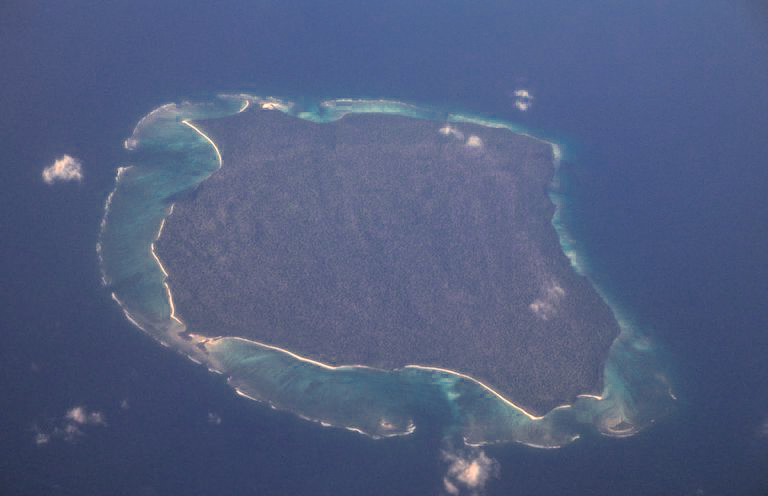
At a time when technology, satellites and the internet have connected almost every corner of the planet, a tiny community on a remote Indian island continues to live largely beyond the reach of the modern world. The Sentinelese of North Sentinel Island remain one of the world’s most isolated Indigenous peoples, fiercely guarding an independence that has endured despite repeated attempts by outsiders to contact them.
This three-part series explores the extraordinary story of the Sentinelese: who they are and how they live; the often troubled history of encounters between the islanders and outsiders; and, finally, the difficult question confronting modern India as technology makes observation increasingly possible — should one of the world’s last isolated peoples simply be left alone?
Who Are the Sentinelese? Inside the World’s Most Isolated Tribe
With the World Wide Web and digital connectivity reaching almost every corner of the planet, it is fascinating that more than 100 tribes around the world continue to live largely isolated from modern industrial society.
Among the most isolated are the Sentinelese, who live on North Sentinel Island in India’s Andaman and Nicobar Islands.
Preserving the isolation of such tribes has become increasingly difficult. Contact with the outside world threatens not only their unique culture and way of life but potentially their survival, particularly because isolated populations can be highly vulnerable to infectious diseases introduced by outsiders.
The Sentinelese population is uncertain, with estimates generally ranging from a few dozen to perhaps a couple of hundred people.
They continue to live as hunter-gatherers, fishing in the waters around their island, gathering food from the forest and hunting with bows and arrows.
North Sentinel Island lies in the Bay of Bengal and is covered by dense forest. The island is approximately eight kilometres long and seven kilometres wide, with an area of roughly 60 square kilometres.
Travel to the island is strictly restricted under Indian law. Outsiders are prohibited from approaching the protected tribal reserve without authorisation, primarily to protect the Sentinelese from outside interference and disease.
Security forces monitor the surrounding waters to prevent unauthorised entry.
Consequently, much of what is known about the Sentinelese comes from observations made from a safe distance and from the limited contact expeditions conducted in previous decades.
The Sentinelese build narrow outrigger canoes that they use in shallow coastal waters, propelling them with poles rather than venturing far out to sea.
They construct communal shelters as well as smaller dwellings. They use bows, arrows and spears for hunting and for defending their territory.
Their diet is believed to include fish, crabs and other seafood, as well as wild fruits, tubers, honey, eggs and small animals found on the island. There appears to be no evidence of agriculture.
The Sentinelese also make baskets and wooden tools, some tipped with iron.
Where they obtained their knowledge of ironworking remains particularly interesting. Metal salvaged from shipwrecks and other material washed ashore appears to have provided an important source.
In 1981, the cargo ship Primrose ran aground on a reef near North Sentinel Island. The crew was eventually rescued, while the Sentinelese were later reported to have salvaged metal from the wreck for their tools and weapons.
Little is known with certainty about Sentinelese beliefs, social organisation or language.
Even their own name for themselves is unknown. “Sentinelese” is an outside name derived from North Sentinel Island.
The neighbouring Onge people have reportedly used their own name for the islanders, but there has been so little sustained communication that outsiders remain unable to understand the Sentinelese language.
This extraordinary lack of knowledge is itself one of the most remarkable things about the community.
In an age when satellites circle the planet, billions of people communicate instantly across continents and virtually every populated region has been mapped, a small community continues to live largely beyond the modern world’s social and technological networks.
Their isolation, however, should not be confused with ignorance or primitiveness.
The Sentinelese have developed the knowledge and skills necessary to survive independently on their island for generations. They understand their environment, construct boats and shelters, hunt, fish, gather food and manufacture tools suited to their surroundings.
They have also demonstrated repeatedly that they are capable of defending their territory.
Outsiders who have attempted to land on the island have frequently been met with bows and arrows. Even helicopters observing the island have been fired upon.
This determination to resist outsiders has helped the Sentinelese preserve their independence.
But it has also created a difficult question for the modern world.
How do you protect a people who have made it abundantly clear that they do not want outsiders interfering with their lives?
India’s answer has increasingly been to leave them alone.
For the Sentinelese, that isolation may be their greatest protection.