
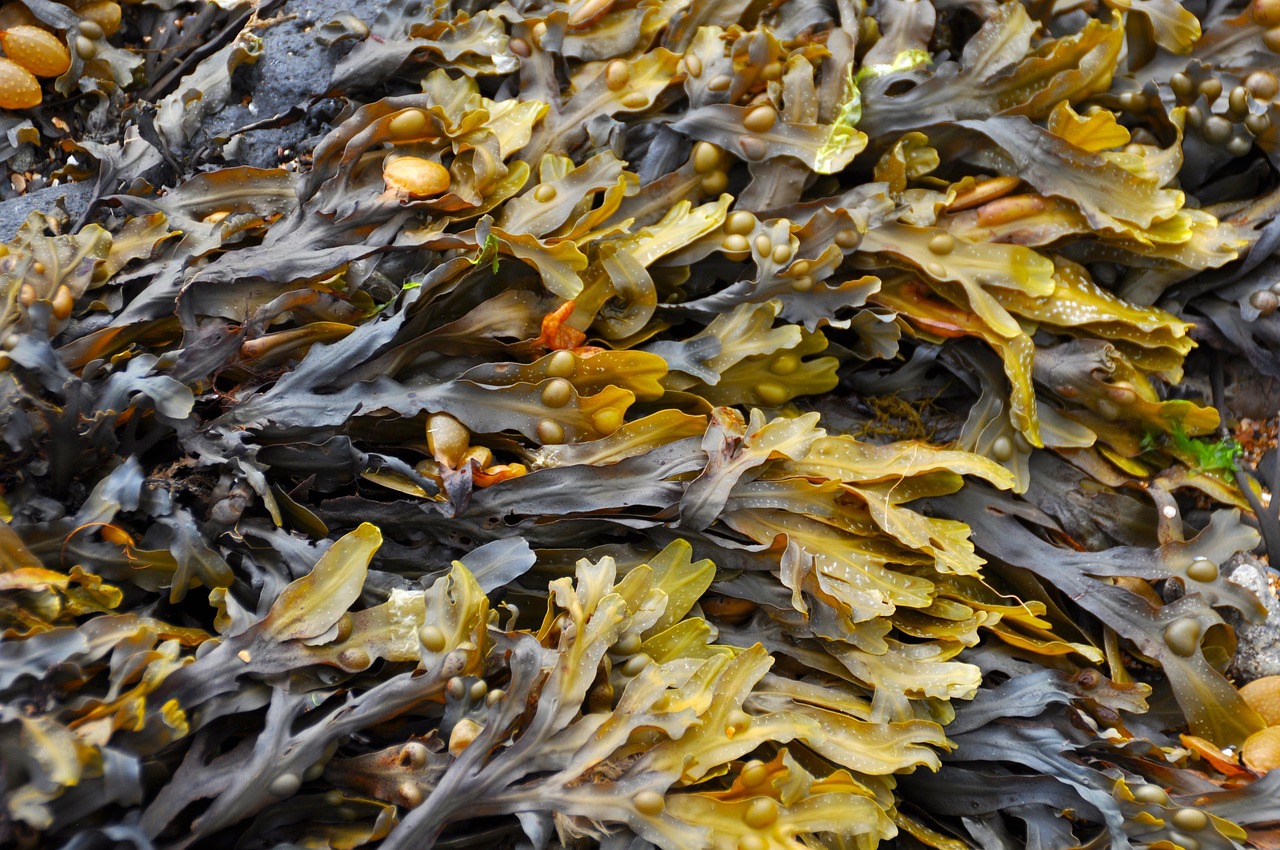
India’s sea weed industry has tremendous potential looking at India’s 7,500 of coastline virtually untapped as far as sea weed farming is concerned. India taking the correct initiatives can truly become a leader in the field of sea weed export. Today countries like China, Indonesia, Phillipines, South Korea,Malaysia, are the main players in the field of sea weed export. Japan in the 4th century and China in the sixth century had started using sea weeds as food item.
In 2023 India’s sea weed industry generated ₹200 crore with an annual production of 33,345 tonnes annually which was just one percent of global production. The sea weed industry today stands globally at US$ 5 billion and this industry has literally started booming in India now. According to a World Bank report, 10 emerging seaweed markets could grow by up to US$ 11.8 billion by 2030.
Sea weed is a sea plant that grows in the sea which contains many important vitamins, minerals and amino acids.It contains 54 trace elements and essential nutrients that help fight diseases like cancer, diabetes, arthritis, heart problems and high blood pressure. Most importantly, seaweed cultivation is sustainable as it requires no land, freshwater, fertilizers . India is aiming at reaching a production level of 1.12 million tonnes of seaweed production in five years With 7,500 km-long coastline, sea weed farming is emerging as a significant livelihood option, providing untapped opportunities for coastal communities.
Sea weed is used in many products like food, cosmetics, fertilizers and even medicine. It’s becoming popular worldwide as a healthy food because it’s easy to grow and needs little care. Seaweed is used in industries for making thickening and gelling agents like alginate which is extracted from brown seaweeds and has a US$ 213 million market. It’s used as a thickener in foods, cosmetics, and even medical products. The product Agar, a jelly like substance from red sea weed has a market of US$ 132 million. It’s been cultivated since the 1960s and is used in desserts, jams, and science laboratories.
Carrageenan another jelling agent from red sea weed is used in dairy products, processed food and toothpaste has a market size of US $ 240 millions. The Japanese have been using sea weed as food since 4th century and the Chinese since the 6th century, even today, Japan, China and South Korea are the biggest consumers of seaweed. The seaweed can play a pivotal role in curbing nutritional deficiency in India. Out of around 844 seaweed species, about 60 are commercially valuable. The government, along with the National Fisheries Development Board (NFDB), is working to boost this sector through policies, infrastructure support, and collaborations with states and research institutes.
Nearly ₹ 640 crores has been allocated for infrastructure and support for this sector. In June 2020, the Government of India launched the PMMSY (Pradhan Mantri Matsya Sampada Yojana) with an investment of ₹20,050 crore to boost the fisheries sector. Seaweed farming is a priority area under this scheme. The government has allocated a total budget of ₹640 crore for seaweed cultivation in India from 2020 to 2025. This significant investment is aimed at boosting the seaweed industry and promoting sustainability.
Out of this total, ₹194.09 crore is being used for key projects, including the establishment of a Multipurpose Seaweed Park in Tamil Nadu and the development of a Seaweed Brood Bank in Daman and Diu. So far, 46,095 rafts and 65,330 monocline tubenets have been approved for seaweed farming. Seaweed is one of the eight types of biostimulants, which help increase crop yields, improve soil health and make plants stronger. The Government of India regulates the quality of seaweed used as biostimulants under the Fertilizer (Control) Order, 1985. A biostimulant is a natural substance or microorganism that helps plants grow stronger. It improves the plant’s ability to absorb nutrients and makes them more resistant to stress, like drought or diseases.
Unlike fertilizers or pesticides, biostimulants don’t provide nutrients directly but enhance the plant’s natural processes for better growth and health. Sea weed will boost organic farming, with seaweed-based organic fertilizers for farmers. Seaweed farming is eco-friendly as it helps fight climate change by absorbing CO₂ from the air. Seaweed also improves ocean health by cleaning the water and providing homes for marine life. Seaweed farming offers a new way to earn money besides fishing. For example, farming Kappaphycus alvarezii can earn farmers up to ₹13,28,000 per hectare per year.
Seaweed products like biofuels and fertilizers are in high demand globally, helping India earn foreign currency. The CSIR-Central Salt and Marine Chemicals Research Institute (CSIR-CSMCRI) introduced a tissue culture technique to mass-produce Kappaphycus alvarezii (elkhorn sea moss) in Tamil Nadu. This seaweed is valuable for producing carrageenan, used in food, pharma, and cosmetics. Through this project, tissue-cultured seedlings were distributed to farmers in Ramanathapuram, Pudukottai, and Tuticorin districts. Farmers produced 30 tonnes of seaweed in just two cycles, with a 20-30% higher growth rate and better-quality carrageenan. This breakthrough is set to boost commercial seaweed farming in India.