
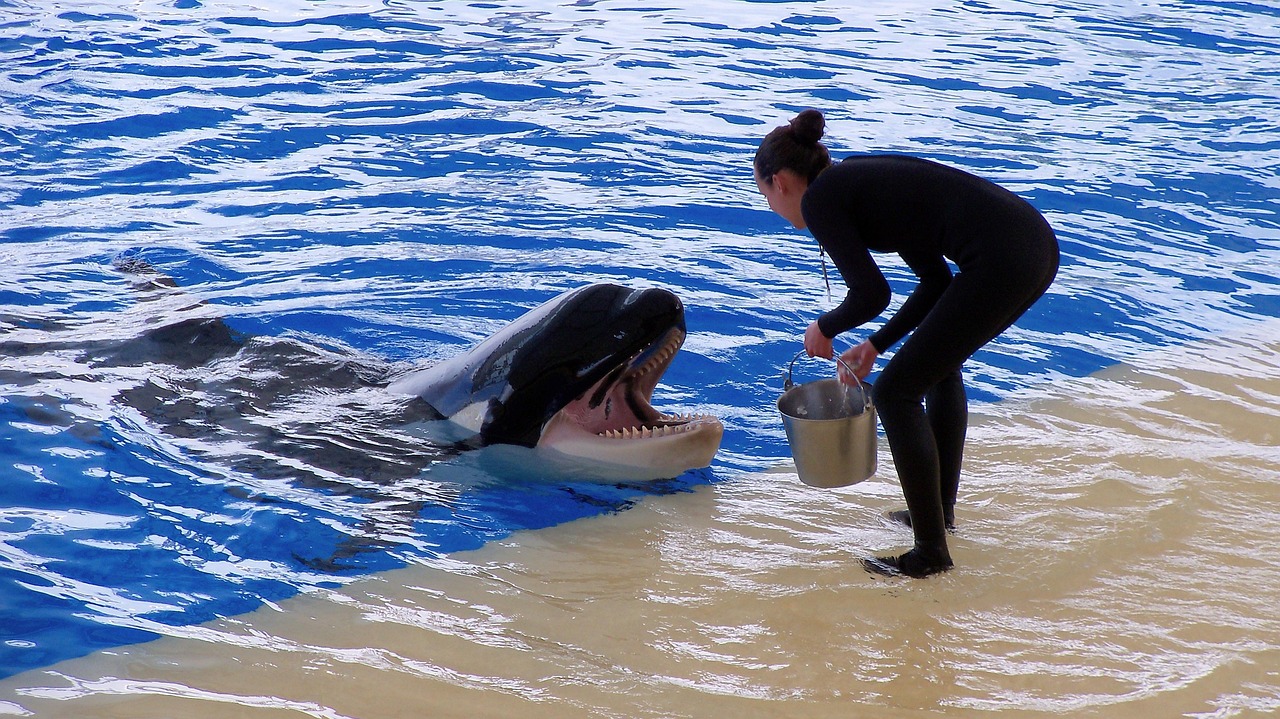
Are killer Whales ( a species of dolphin founds in all oceans) more intelligent than Man?
It’s not a theoretical question anymore? Latest research is pointing towards the fact that they may possess more intelligence than humans.
Reports of killer whales or Orcas say that the animals are attempting to start a “conversation” with humans. This has been documented for nearly three years in the coast of Iberian peninsula. They have been known to attack fishing vessels but in a coordinated fashion which seems to give rise to the idea that the killer whales are teaching each other methods of provoking humans and boat.
Are these intelligent animals really rebelling against the fishing industry?
Though we do not know why whales are acting is this manner, one must keep in mind , we do know that orcas are one of the most intelligent species on Earth, capable of problem-solving, communicating and even creating culture within their social groups. They are absolutely capable of coordinating attacks, even if we don’t understand their motivations.
The killer whales are known to be coming close to fishing vessels and leaving uneaten prey to be used by humans. There have been reports of 34 cases in which orcas attempted to share their prey with humans either in boats, in the water, or on shore. According to the study, in 97 percent of the observations, as the orcas approached the humans, they dropped the presented prey and waited for the humans to respond.
Afterwards, the orcas would retrieve the prey and either leave, share the meal with a different whale, or return later with it. In only four cases did people accept the meal. In one of those four cases, after a researcher examined the food and then placed it back in the water for the whale, the orca tried to give the meal back to the human.
“Orcas are apex predators that often eat other large mammals, but when it comes to people, they occasionally prefer to share, indicating their interest in building relationships outside their own species,” the study said.
The 34 encounters took place over a 20-year period and spanned across six populations of orcas in four different oceans. These populations included: The Punta Norte Patagonia population near central Argentina in the Western South Atlantic, the Pelagic and Coastal orca populations around New Zealand in the South Pacific, the West Coast Transient and Gulf of Alaska Bigg’s populations in the North Pacific and the orca populations off the coast of Norway in the North Atlantic.
In these instances, the orcas presented humans with either freshly-caught fish, mammals, or sometimes invertebrates. The prey were often deceased, except in a few cases, including when an orca offered someone an injured broadnose sevengill shark and another orca offered someone a stingray.
With so many instances of orcas sharing food with humans, the study authors were left wondering why this was the case. According to the study, there could be several reasons. One reason could be that killer whales often kill larger prey and may end up with more food than they need. If it’s difficult to transport, the prey may become more work than it is actually worth. Then they may offer it to others, including humans.
Do they take the humans as their natural companion in the hierarchy of intelligent animals ?
Another reason, the study suggests, is that orcas are highly social creatures and often share food with one another, benefiting their society. They have high levels of encephalization, according to the study, meaning that the brain is relative to their body size, similar to humans.
t could be that orcas recognize us as intelligent creatures as well and perhaps have “theory of mind,” ((having the capacity to understand and reason that others have their own mental states ..beliefs,desires,intentions, different than their own).
“Of the many and varied minds in the sea, likely the greatest are those of orcas.” The Orcas are clearly curious about the boats and boats men going about in the sea which is their home and want to interact with them. They are considered the apex predators of the sea and can that can take on prey much larger than themselves. They are known to have ganged up and killed the largest animal on earth – blue whale. The orcas devoured huge chunks of flesh from the flanks which the whale died an hour later. This was the first-ever documented case of orca-on-blue-whale predation.
What should make Man sit up and think is that they have an incredibly complex and highly evolved brain with memory and emotion that are significantly more developed than even in the human brain. On earth they are clearly the most intelligent animal . However as they are entrapped in an animal’s body in the sea, it would be interesting to find out how they have evolved and how they use their intelligence.
Orcas fast learners and teach each other and become “smarter” as a group. Frequent interactions with humans through boat traffic and fishing activities may also drive orcas to learn new behaviors. In Antarctica, for instance, a population of orcas typically preys on Weddell seals (Leptonychotes weddellii) by washing them off ice floes.
But as the ice melts, they are adapting their hunting techniques to catch leopard seals (Hydrurga leptonyx) and crabeater seals (Lobodon carcinophaga) — two species that don’t rely on ice floes as much and are “a little bit more feisty,” requiring orcas to develop new skills. We must remember that Orcas have about 43 billion cortical neurons – humans have only about 21 billion. The orca cortex has 6 times the area of the human cortex, though the neuron density is about 3 times lower.
Orcas are very good at detecting the direction of sound. They use echolocation not just to communicate with each other and detect obstacles, but also to hunt prey, and even target specific organs within that prey. Case in point, orcas can use echolocation to detect fish long way off. They could perform “very complex neurobiological computations.” Research is being done to unravel the depths of their intellectual prowess.
The orcas possess a complex social structure and exhibit behaviors that demonstrate their advanced cognitive capabilities. They display remarkable problem-solving skills, communication techniques, and even cultural traditions within their pods. The intelligence of orcas is evident in their ability to navigate vast oceanic environments, hunt cooperatively in coordinated strategies, and adapt to changing circumstances.
Their exceptional memory allows them to remember individual vocalizations, hunting techniques, and even specific individuals within their social groups. Furthermore, orcas exhibit emotional intelligence by displaying empathy towards injured or distressed pod members. They have been observed providing support and care for sick or injured individuals within their community.
Orcas complex social structure and remarkable communication skills. As highly intelligent social animals, they live in tight-knit groups called pods. These pods consist of family members who work together to survive and thrive in their marine environment. Within these pods, orcas exhibit intricate dynamics that involve cooperation, communication, and hierarchy. They form strong bonds with their pod members and engage in cooperative hunting strategies to catch prey more effectively.
One of the most intriguing aspects of orca communication is their vocalizations and echolocation abilities. Orcas produce a wide range of sounds including clicks, whistles, and calls that serve various purposes such as locating prey, establishing contact with other pod members, or expressing emotions. Echolocation plays a crucial role in their navigation and hunting by emitting sound waves and interpreting the echoes to perceive their surroundings.
Furthermore, orcas display unique communication patterns within their pods. They have distinct dialects that vary between different populations around the world. These dialects are learned from older members within the pod through vocal mimicry and play a vital role in maintaining social cohesion within the group. Orcas have developed remarkable collaborative hunting techniques that involve synchronized movements, communication, and impressive prey manipulation skills.