
As India prepares for its 2027 Census, the existence of one tiny and almost completely isolated community presents an extraordinary dilemma.
How do you count people who do not want contact with the outside world?
The Sentinelese live on North Sentinel Island in the Andaman and Nicobar archipelago and are regarded as one of the world’s most isolated Indigenous communities.
Their exact population remains unknown.
Estimates have ranged from only a few dozen people to perhaps 200, but obtaining an accurate figure would require precisely the sort of observation and contact that India’s policies are intended to prevent.
The approaching Census has consequently raised the question of whether technology could provide an answer.
Officials have reportedly considered whether drones or satellite imagery could be used to obtain a better estimate of the Sentinelese population without physically entering their territory.
At first glance, it appears an obvious solution.
A drone could theoretically observe the island without officials landing there, while satellite imagery could potentially provide information without any physical contact at all.
But the issue is more complicated.
Experts have warned that drones could themselves be intrusive and might frighten the islanders.
The Sentinelese have repeatedly demonstrated their hostility towards aircraft approaching their territory.
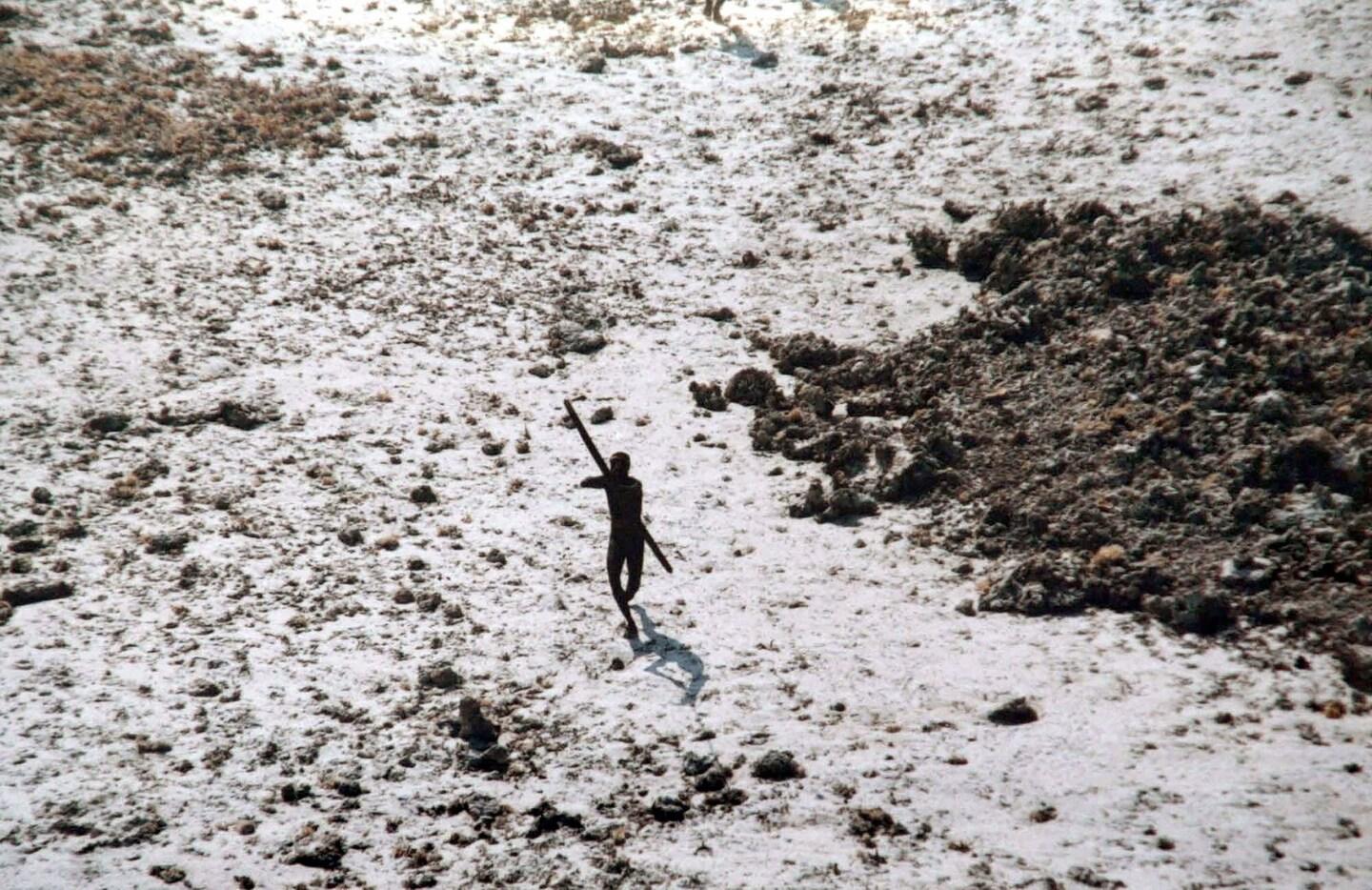
Following the 2004 Indian Ocean tsunami, an Indian Coast Guard helicopter flew over North Sentinel Island to check whether the community had survived.
A Sentinelese man responded by firing arrows at it.
The incident became one of the most famous images of the tribe.
The question surrounding the Census therefore goes far beyond whether modern technology makes it technically possible to count them.
It raises a more fundamental question: should we?
The Sentinelese have survived for generations with minimal contact with the outside world.
Any attempt at close contact poses serious risks, particularly from infectious diseases.
Isolated Indigenous populations may have little exposure to many pathogens circulating among larger populations. Diseases that cause relatively manageable illness elsewhere can consequently have devastating consequences when introduced into communities with limited previous exposure.
The history of the Andaman Islands offers grim warnings.
Outside contact had devastating effects on several neighbouring Indigenous communities.
The Great Andamanese and Onge suffered catastrophic population declines following sustained contact with outsiders, while other Indigenous communities disappeared entirely.
The Sentinelese largely escaped that fate because their isolation protected them.
That makes their apparent hostility towards outsiders look very different.
Their bows and arrows are not merely weapons.
In a historical sense, they have also functioned as a barrier separating a tiny community from forces that devastated other Indigenous peoples.
India has therefore adopted strict restrictions governing access to North Sentinel Island.
Unauthorised visitors are prohibited from entering the protected area, and the waters surrounding the island are monitored to discourage outsiders from approaching.
The policy serves two purposes.
It protects outsiders from a community that has repeatedly demonstrated its willingness to defend its territory.
More importantly, it protects the Sentinelese from outsiders.
The death of American missionary John Allen Chau in 2018 demonstrated why those restrictions matter.
Chau deliberately sought contact with the islanders despite the prohibition on approaching the island.
His death generated enormous international attention, but the incident also raised another concern: by attempting to reach the community, he could potentially have introduced an infectious disease.
The danger of contact therefore works in both directions.
Modern society tends to assume that knowledge is inherently beneficial. We want to know how many Sentinelese there are, what language they speak, what they believe, how they organise their society and how they have survived for so long.
But satisfying our curiosity may not necessarily serve their interests.
Even seemingly harmless observation raises ethical questions when the people being observed have never consented to it.
Drones make that dilemma particularly striking.
To the outside world, a drone may represent a non-invasive technological solution.
To somebody living on an isolated island with no knowledge of modern aviation, an unidentified machine flying overhead could represent something entirely different.
Satellite observation, if sufficiently accurate, could potentially be less intrusive, but it too raises questions about how far governments should go in attempting to document a community whose isolation is itself legally protected.
There is also the practical question of what a precise population count would achieve.
Census data normally helps governments allocate resources, plan infrastructure and provide education, healthcare, housing and other services.
But the Sentinelese do not participate in those systems.
Building roads, schools or hospitals on North Sentinel Island would require precisely the kind of intervention that India’s present policy seeks to avoid.
The purpose of counting them is therefore fundamentally different from counting the rest of India’s population.
An approximate estimate may be useful for monitoring the long-term survival of the community. A sudden population decline, for instance, could potentially indicate disease, environmental damage or some other serious threat.
But obtaining greater accuracy has to be weighed against the possible consequences of intrusion.
North Sentinel Island represents an unusual test of how a modern state should exercise responsibility over people who want almost nothing from the modern state except to be left alone.
India undoubtedly has a responsibility to protect the Sentinelese.
But protection does not necessarily require contact.
It may instead require preventing fishermen, tourists, missionaries and adventurers from entering their territory, protecting the surrounding marine environment and ensuring that curiosity about the community does not become an excuse for intrusion.
The Sentinelese have survived for thousands of years without sustained outside intervention.
Their continued existence in the 21st century is extraordinary.
As technology makes it increasingly difficult for any place on Earth to remain genuinely isolated, the challenge is no longer simply whether humanity has the ability to observe them.
It is whether we have the restraint not to.
One Comment
Comments are closed.