
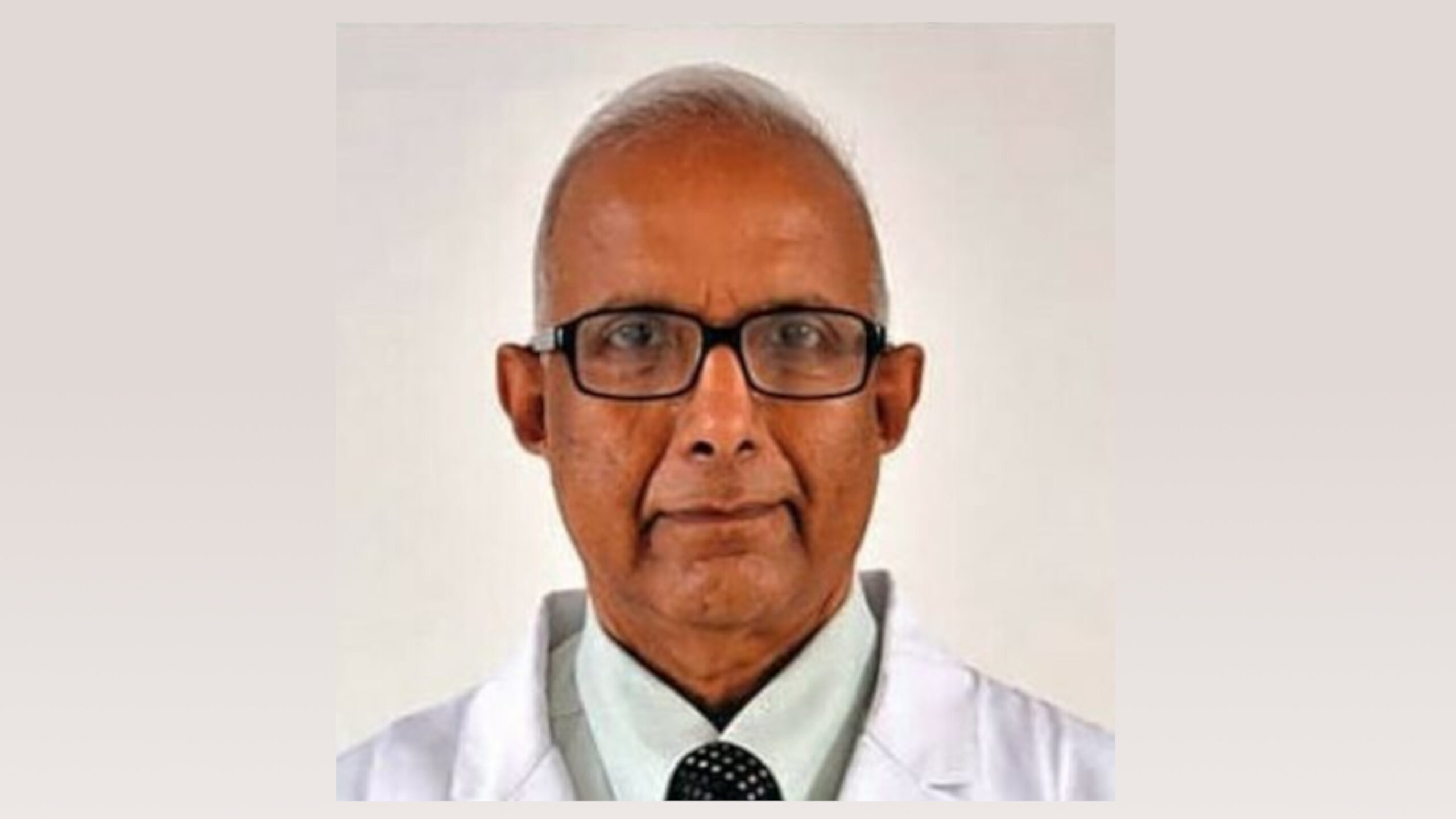
Renowned Indian heart surgeon Dr Arkalgud Sampath Kumar has added laurel to his credit. His name has been enshrined in The Paediatric Cardiology Hall of Fame in the prestigious journal “Cardiology in the Young” published by the Cambridge University press. This is a first for an Indian cardiac surgeon.
His citation reads, Dr Sampath Kumar is “one of the finest humans our profession is privileged to have”
Born in in 1946, his parents “ingrained the value of merit and diligence” in him and He was schooled at some of the finest institutions of Bangalore. He decided to pursue medicine at his mother’s weekly blessings, to serve the poor.
In 1963, he was admitted to study medicine at the prestigious Bangalore Medical College. During his first year as a medical student, his very first patient was, by serendipity, his elder sister, who was suffering from gestational diabetes. Kumar was entrusted with the role of administering insulin and tending to his sister and her new-born. This experience had a lasting impact on his mind, in caring for patients as an unbiased, compassionate and honest individual. Thus began his long sojourn with clinical medicine.
In 1967, as a third-year medical student, Kumar rotated through the thoracic surgery service of Professor Gerald “Gerry” Mascarenhas who was the pioneer to start a thoracic programme in Bengaluru at the SDS Sanatorium.
He met the pioneer of cardiac surgery in India, Professor Gopinath from Delhi, while demonstrating heart valves and disc oxygenators as a volunteer. A student of Reeve H. Betts and C. Walton Lillehei, Professor Gopinath who had performed the first open-heart operation with a pump-oxygenator in India in 1961, was impressed.
By the end of 1967, Kumar had participated in closed heart surgeries with Mascarenhas as an intern. In December 1969, Kumar received his medical degree after five years of study and a one-year as an intern in the affiliated hospitals of Bangalore.
He applied to the All India Institute of Medical Sciences (AIIMS), India’s premier institute for medical education in the capital city of New Delhi, for residency training in general surgery. He was mentored by some of the brightest minds in surgery of the time, including Professors B.N.B. Rao, Atm Prakash, I.K. Dhawan, and M.M. Kapur. His belief in being able to achieve outstanding surgical excellence by practising the philosophy of caring for patients with empathy and respect sums up his motivation as a clinician.
That cardiac surgeons can be gentle, respectable, and grounded as individuals instead of being fancifully arrogant and haughty through their careers to beseech surgical excellence can be learnt from Dr Kumar’s career. He spent a year as a fellow in Milawaukee with Dr Dudley Johnson and opted to return to serve the poor.
Dr Kumar has mentored over one hundred and twenty cardiac surgeons of whom a large majority took interest in paediatric surgery. Watching Dr Kumar perform a total correction for tetralogy or a valve repair, the finesse, patience and speed can only be matched by the seamless landing of the F-8 on the Nimitz.
He thought it pertinent to encourage, educate and motivate the doctors of tomorrow in aspects of compassionate and ethical care of patients. A more interesting facet of Dr Kumar’s surgical dexterity is in his ability to operate without surgical loupes or a headlight. He is the first Indian surgeon to perform cardiac surgery at high altitude in LEH, Ladakh. He has served pro-bono in a number of philanthropic institutions.
He sent a number of trainees abroad with his wide network of known doctors worldwide. He is member of all prestigious professional Societies including Ross Society. The American Association for Thoracic Surgery bestowed on him their Career Achievement Award, another first for an Indian surgeon.
The IACTS (Indian Association of Cardio-Thoracic Surgeons) in 2014 honoured him with the Lifetime Achievement Award for his pioneering services to the advancement of Cardiovascular surgery, research, teaching and patient care. He has been the chief editor of two prestigious journals on the subject. He has introduced a number of innovations during his 40 years at AIIMS, with safer surgery and cost cutting.
These included Mitral and Aortic valve repair, homograft and autograft valve replacement (The Ross procedure), normothermic perfusion and blood conservation. He also introduced new techniques in paediatric surgery with autologous arterial patch, right thoracotomy, transaortic repair of TOF (Tetralogy of Fallot) etc. He has published more than 300 monographs, five text books including on Patient’s rights and 33 surgical videos.
He has toured and demonstrated his techniques in many countries. He has been appointed Emeritus Professor at the All India Institute of Medical Sciences, a recognition rendered only once before to professor Gopinath.